Indonesia is Southeast Asia's largest economy, and Jakarta, Surabaya and Bali all attract foreign professionals every year. But the question most people search for — can a foreigner simply move to Indonesia and find a job? — has a clear answer: not without an employer.
Indonesia's system is built around employer sponsorship. A company decides it needs a specific foreign specialist, gets government approval for that position, and only then can the worker receive a work stay permit. Understanding that sequence is the single most useful thing a foreign job seeker can know, because it changes how you search.
This guide explains who Indonesian employers actually hire from abroad, which roles are open and closed to foreigners, and how to position your profile.
How Hiring a Foreigner Works in Indonesia
Foreign employment in Indonesia is governed mainly by Government Regulation No. 34 of 2021 on the employment of foreign workers. The practical sequence looks like this:
- An Indonesian employer identifies a role it believes needs foreign expertise.
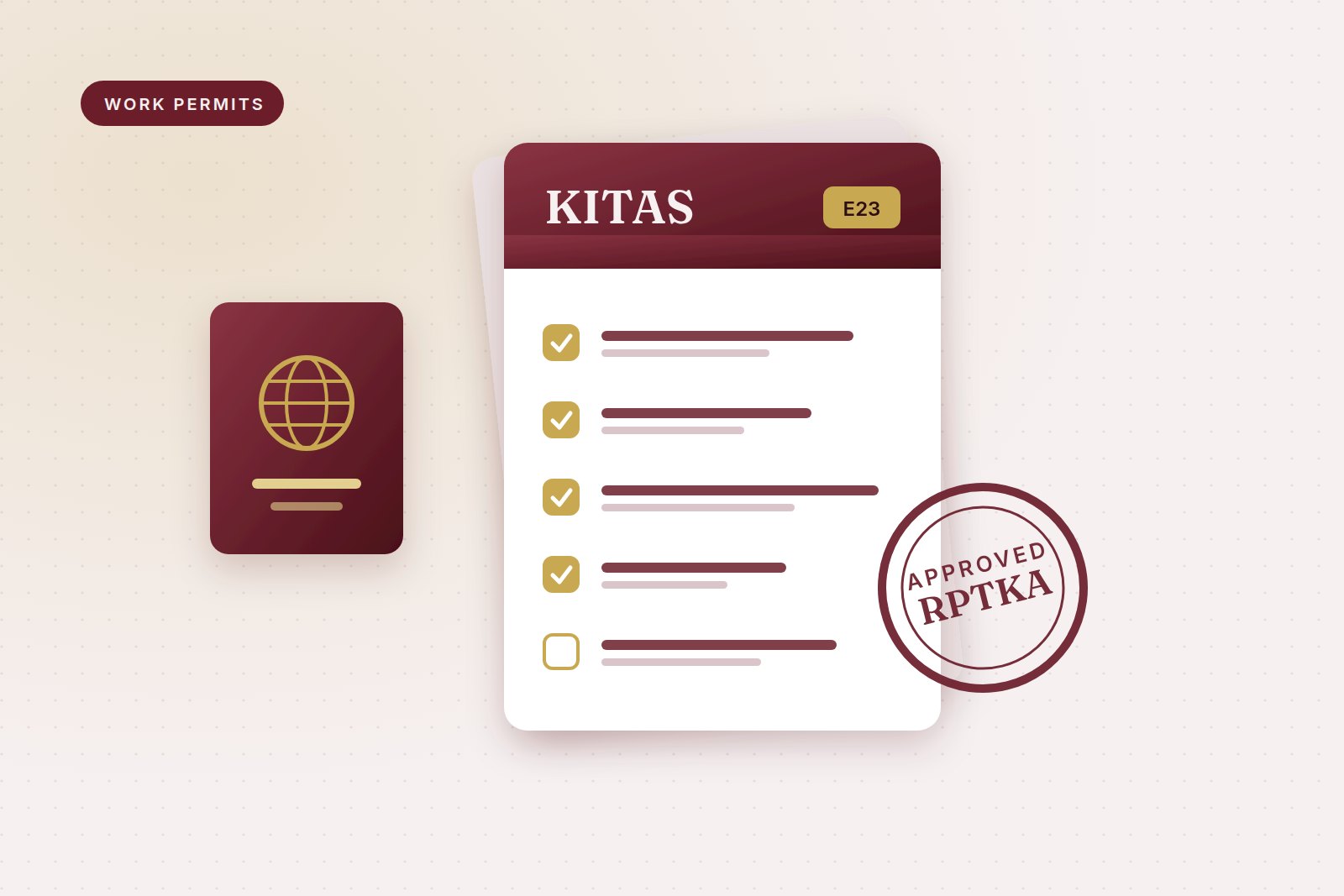
- The employer applies for an RPTKA — the foreign worker utilisation plan — through the Ministry of Manpower. The RPTKA names the position and the period.
- The employer pays the DKP-TKA levy, a compensation fund of US$100 per foreign worker per month.
- Immigration issues the work stay permit (commonly called a Work KITAS, visa index E23) linked to that approved position.
The key point: you cannot apply for a Work KITAS on your own. The employer is the sponsor, and the permit is tied to the job and the employer. If you change employers, the process generally starts again.
For a full walkthrough of permits, see our KITAS and work permit guide.
Who Indonesian Employers Hire From Abroad
Because every foreign hire costs the employer time, a monthly levy and an approval process, companies reserve it for roles they genuinely cannot fill locally. In practice, that means:
- Experienced specialists. Employers and advisers commonly cite a requirement of education relevant to the role plus at least five years of experience in the field, or a recognised competency certificate.
- Senior and technical positions. Engineering, mining and energy, IT and software architecture, finance and specialist management roles are the traditional areas.
- Roles with a skills-transfer element. Indonesian law requires employers to assign an Indonesian counterpart to work alongside the foreign worker and to provide training. Employers therefore favour people who can teach and hand over knowledge.
- Language and market expertise. Companies serving international customers sometimes need people with specific language skills and market knowledge that are rare locally.
Entry-level roles, general office jobs and positions that Indonesian graduates can fill are very rarely approved for foreign workers.
Roles Foreigners Cannot Hold
This surprises many applicants. Under Minister of Manpower Decree No. 349 of 2019, a list of positions is closed to foreign workers. Most notably, foreigners cannot be placed in roles that manage personnel or human resources — including Personnel Director, Human Resources Manager, Industrial Relations Manager, and supervisory roles in recruitment, placement and career development.
If your background is in HR, recruitment or people management, Indonesia is a difficult market to target through employment. Your experience may be better matched to markets such as the UAE — see how to find a job in Dubai.
A foreign worker also cannot hold more than one position within the same company.
Where Foreigners Look for Work in Indonesia
Jakarta is the main hub: regional headquarters, banks, consultancies, technology companies and most multinational offices are there. We cover the capital in detail in jobs in Jakarta for foreigners.
Surabaya and industrial zones such as those around Bekasi and Batam host manufacturing and logistics employers.
Bali attracts a lot of interest, but most foreigners there are tourists, remote workers or business owners rather than employees of Indonesian companies. Employed roles in Bali exist — mainly in hospitality management and tourism — but they are limited and competitive.
Remote Work Is Not the Same as Working in Indonesia
Indonesia offers a remote worker stay permit (E33G) for people who live in Indonesia while working for an employer or clients outside Indonesia. It does not allow you to be employed by an Indonesian company. If an Indonesian business pays you for work, you need an employer-sponsored work permit.
How to Position Your Profile
Because employers are hiring for specific, approvable roles, your CV needs to make the case quickly:
- Lead with your specialism, not a general objective. "Senior reservoir engineer, 9 years, offshore gas" tells an employer the role could justify an RPTKA.
- Quantify your experience. Years in the field matter because the approval process checks them.
- Show skills transfer. Mention training, mentoring or team leadership — it matches what the regulation asks of the employer.
- List your languages clearly, with levels. English is the working language of most multinationals in Jakarta. Bahasa Indonesia is a strong plus. Additional languages can be a real differentiator for internationally facing roles.
- Have your documents ready. Degree certificates, reference letters and a passport valid for well over six months.
A Note on Language Skills
For some internationally facing roles, a language that is scarce in the local market can make a candidate stand out — for example, professionals who work in Farsi/Persian as well as English, where a company serves customers or partners who speak it. We look at this in is speaking Farsi a career advantage in Southeast Asia?.
How TalentBridge HR Can Help
TalentBridge HR reviews candidate profiles against the requirements employers share with us. If you are a Farsi/Persian-speaking professional currently based in Indonesia, you can register your profile on our Persian-speaking candidates page.
To be clear about what that means: registering is not an application for a specific vacancy, and it does not guarantee an interview, a job offer or a work permit. We do not sponsor work permits ourselves — sponsorship always comes from the hiring employer. If a role matches your experience, we will contact you before sharing your details with anyone.
Frequently Asked Questions
Can a foreigner get a job in Indonesia without a sponsor? No. Employment in Indonesia requires an Indonesian employer to obtain an approved foreign worker plan (RPTKA) and sponsor your work stay permit. You cannot apply for a Work KITAS independently.
Can I work in Indonesia on a tourist or visit visa? No. Working for an Indonesian employer on a visit or tourist visa is not permitted and can lead to deportation.
What experience do Indonesian employers need from foreign workers? Education relevant to the role and, commonly, at least five years of experience in the field or a recognised competency certificate.
Which jobs are foreigners not allowed to do in Indonesia? Positions listed in Minister of Manpower Decree No. 349 of 2019, notably roles that manage personnel or human resources, such as HR Manager or Personnel Director.
Who pays the foreign worker levy? The employer pays the DKP-TKA compensation fund, US$100 per foreign worker per month.
This article is general information, not legal or immigration advice. Rules change; confirm current requirements with Indonesia's Ministry of Manpower, the Directorate General of Immigration (imigrasi.go.id) or a licensed adviser before making decisions.