Jakarta is home to most of Indonesia's regional headquarters, banks, consultancies and multinational offices — which also makes it where most foreign professionals in Indonesia are employed. If you are looking for work in Indonesia as a foreigner, Jakarta is usually the place to start.
This guide covers where the roles are, what Jakarta employers expect from foreign hires, how to search, and what to check before you accept an offer.
First, the Ground Rule
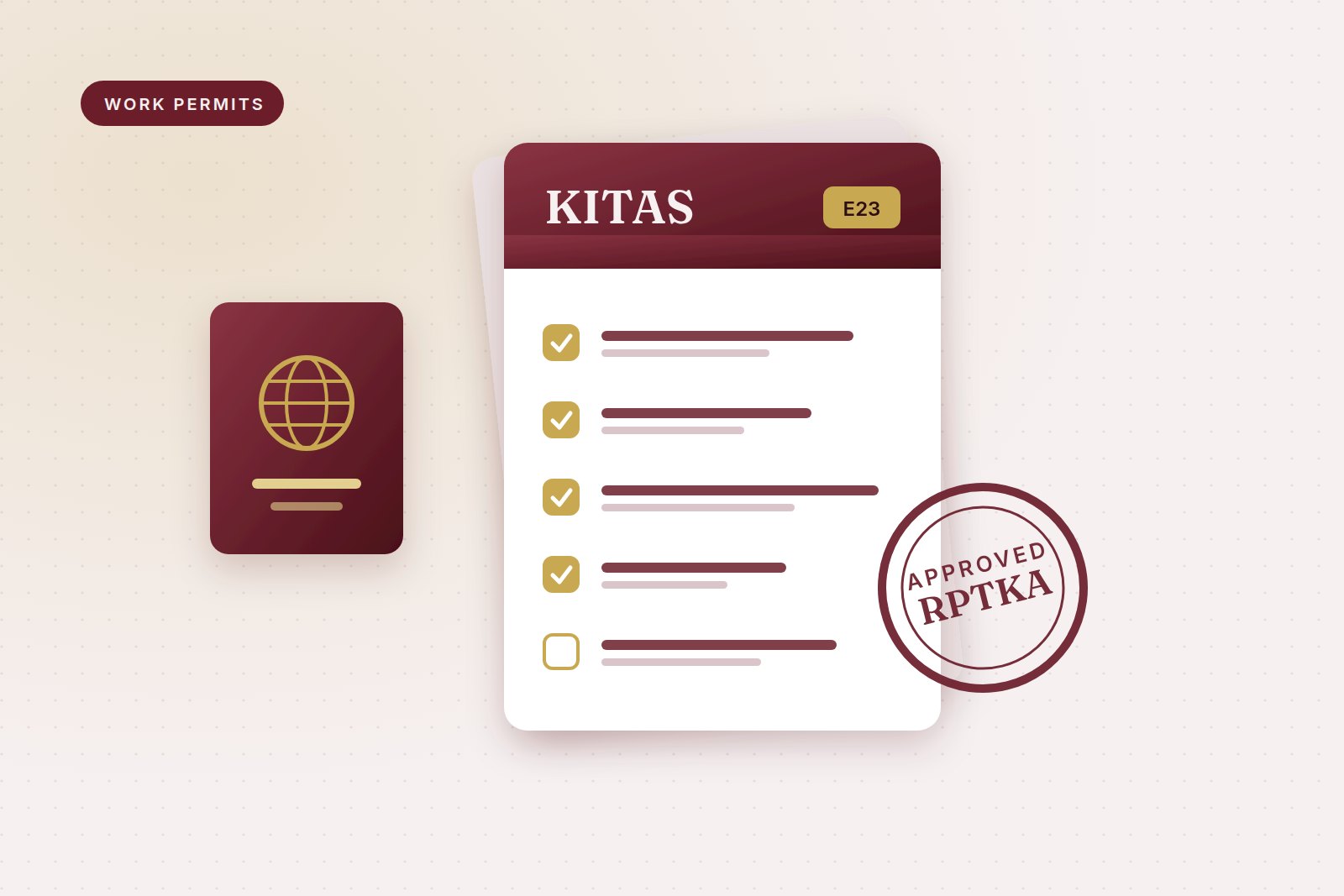
Every foreign hire in Jakarta goes through the same system: the employer gets a foreign worker plan (RPTKA) approved for a specific position, pays a monthly levy, and sponsors your Work KITAS. You cannot arrange this yourself. We explain the steps in our KITAS and work permit guide.
Because this process costs employers time and money, Jakarta companies hire foreigners mainly for senior, specialist or hard-to-fill roles — not for positions the local talent market already supplies.
Industries That Hire Foreign Professionals in Jakarta
Financial services. Banks, insurers, investment firms and fintech companies hire specialists in risk, treasury, compliance, actuarial work and regional leadership.
Technology. Engineering leadership, software architecture, data and product roles at larger technology companies and regional headquarters.
Energy, mining and resources. Many companies in these sectors run their head offices from Jakarta and hire technical specialists and project leaders.
Consulting and professional services. Management consulting, audit, tax and legal-adjacent advisory firms bring in specialists and managers with regional experience.
Manufacturing and engineering. Plant management, quality, and technical roles, often with time spent at industrial sites outside the city.
Education. International schools hire qualified teachers, typically with recognised teaching credentials and experience.
International trade, logistics and customer-facing regional roles. Companies serving customers across Asia and the Middle East sometimes need specific language skills that are rare locally.
What Jakarta Employers Expect
- Deep experience. Employers and advisers commonly cite at least five years in your field, or a recognised competency certificate, plus relevant education.
- Willingness to transfer skills. The employer must assign an Indonesian counterpart to learn from you. Show mentoring and training in your CV.
- Strong English. English is the working language in most multinational offices. Bahasa Indonesia is a significant advantage, especially for client-facing and management roles.
- Cultural adaptability. Hierarchy, relationship-building and indirect communication matter in many Indonesian workplaces.
Also note: roles that manage personnel or human resources, such as HR Manager or Personnel Director, are closed to foreign workers under Minister of Manpower Decree No. 349 of 2019.
How to Search
- Target employers, not job boards. Most foreign hires come through multinationals and large Indonesian groups. Identify companies in your sector with a Jakarta presence and follow their career pages.
- Use recruiters who work on senior and specialist roles. They know which employers are prepared to sponsor.
- Network in your industry. Chambers of commerce, professional associations and alumni groups are active in Jakarta.
- Consider an internal transfer. Moving to Jakarta with your current multinational employer is often the smoothest route.
- Make your CV scannable. Specialism, years of experience, languages with levels, and a line on skills transfer — all on the first page.
How to Evaluate an Offer
Before you accept, check:
- Permit sponsorship in writing. The employer should confirm it will obtain the RPTKA and Work KITAS and pay the DKP-TKA levy.
- The job title on the RPTKA matches the job you will actually do.
- Contract type and duration, and what happens to your permit if the contract ends early.
- The full package: salary, currency, housing, health insurance, annual flights, school fees if relevant, and tax treatment. Packages vary widely by sector and seniority, so compare against your own market data rather than relying on a single figure.
- Relocation support and who handles registration once you arrive.
A legitimate employer will never ask you to pay for your own work permit or the employer's levy.
Language Skills as a Differentiator
For internationally facing roles, a language that is scarce in Jakarta's talent market can set you apart — for example Farsi/Persian for companies with Persian-speaking customers or partners. See is speaking Farsi a career advantage in Southeast Asia?
How TalentBridge HR Can Help
If you are a Farsi/Persian-speaking professional already based in Indonesia, you can register your profile on our Persian-speaking candidates page. We review profiles against employer requirements and contact you before sharing your details. Registration is not an application for a specific vacancy and does not guarantee an interview, job offer or work permit.
For the bigger picture, read jobs in Indonesia for foreigners.
Frequently Asked Questions
Is it easy for foreigners to get a job in Jakarta? It is realistic for experienced specialists and senior professionals whose skills are hard to find locally. Entry-level and general roles are rarely open to foreign workers.
Do I need to speak Bahasa Indonesia to work in Jakarta? Not always — English is the working language in most multinationals — but Bahasa Indonesia is a strong advantage, and employers must provide Indonesian language training for foreign workers.
Which industries in Jakarta hire the most foreigners? Financial services, technology, energy and mining, consulting, manufacturing and international education.
Can I look for a job in Jakarta while on a tourist visa? Check the conditions of your specific visit visa for what activities it allows. What is certain is that you cannot start working for an Indonesian employer until it has obtained your Work KITAS.
This article is general information, not legal or immigration advice. Confirm current requirements with Indonesia's Ministry of Manpower, the Directorate General of Immigration (imigrasi.go.id) or a licensed adviser.